The major parties are owned by the big end of town.
The Senate RRAT inquiry into the closure of bank branches handed down its report last May.
Labor is still stalling on responding to the report which called for a public bank that would keep branches open and ensure that people could access all banking services including access to cash.
People First is the only party calling for a proper public bank (not postal bank which doesn’t offer all banking services) that will keep branches open, provide cash services and also offer fixed home loans with a duration of up to 25 years.
Because private banks rely on foreign debt they cannot access bonds with a duration of longer than five years. This means they can’t lend at a fixed rate for longer than five years. The risk of fluctuating interest rates then falls onto hard working Australians who are constantly being bombarded with the volatile decisions of the RBA.
Albanese and Labor don’t want a public bank because their union mates own a large share of the private banks through the industry funds.
That is why he is kicking the can down the road on responding to the banking inquiry.
He doesn’t want to admit that the Labor party, like the Coalition, are owned by the big end of town.
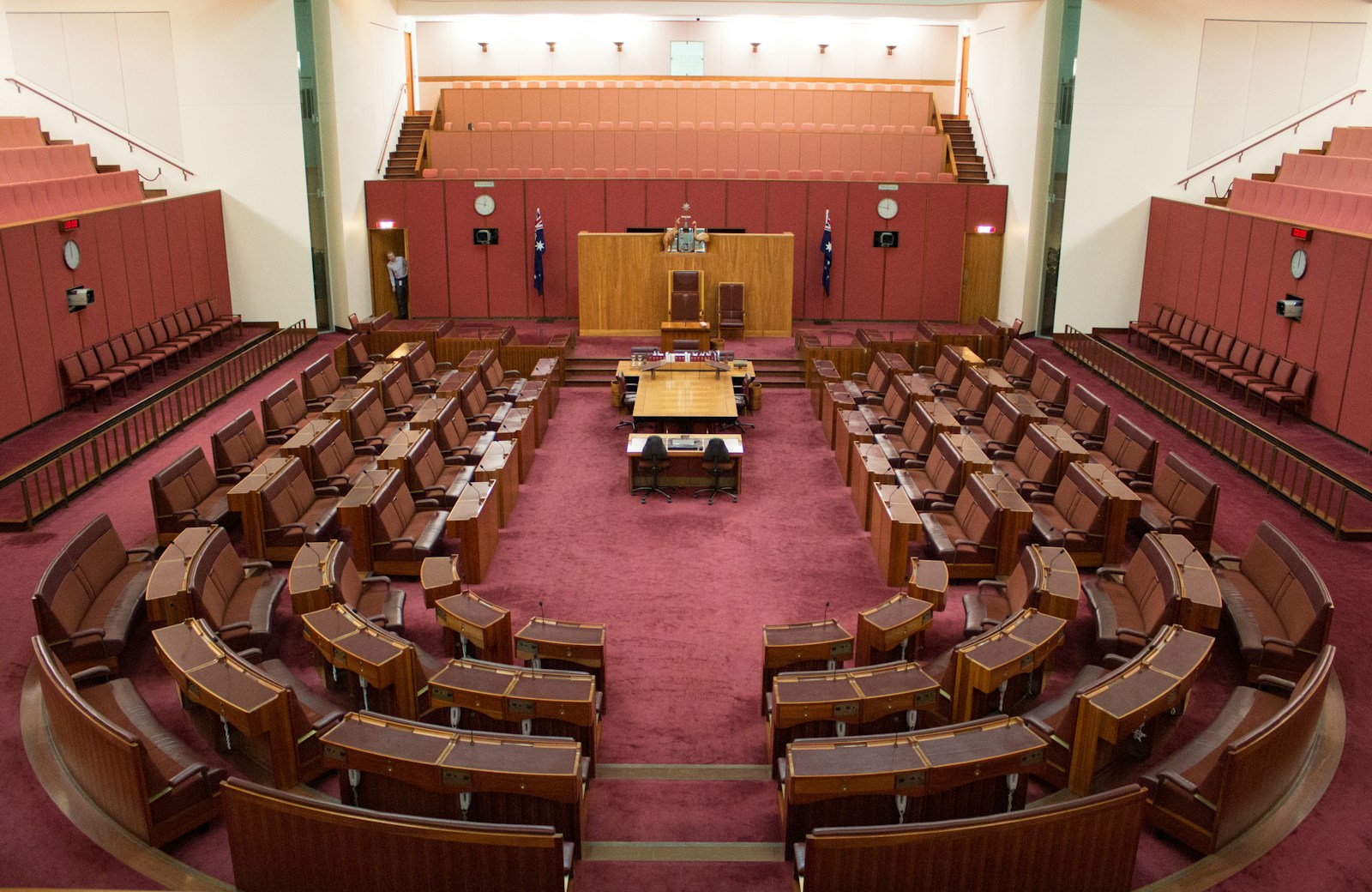
Senate on 25/11/2024
DOCUMENTS
Rural and Regional Affairs and Transport References Committee
Order for the Production of Documents
Senator RENNICK (Queensland) (18:01): The other thing we’ve had an order for the production of documents on is to see whether the Albanese Labor government has responded to the report of the Senate Rural and Regional Affairs References Committee inquiry into bank closures in regional Australia. On that, I move:
That the Senate take note of the documents.
This would have to have been one of the most widely followed Senate inquiries during the term of the Albanese Labor government. It had an enormous amount of media attention because people are rightly concerned about the closure of branches in the regions. As we found out, it’s not just in the regions; there’s even a lot of angst in metropolitan communities about the closure of local branches. People are fed up to the back teeth, whether it’s big government or big business that’s screwing the little guy.
That’s what we’re seeing now. Let’s take insurance. It’s not quite banking but it’s similar in the sense that it was all privatised in the 1990s. When you get on the phone wanting customer service you’re listening to waltzes and hitting numbers trying to get through to someone who’ll actually speak to you, because you can’t get any service anymore. I’ve had this happen to me. I like to go to the branch and stand in a line playing on my phone and then getting some face-to-face service—I’m a bit old-fashioned like that, I’ll admit. But when it comes to complex administrative issues that are messy, things like internet banking just don’t cut it. I’ve done this a number of times. I’ve gone to the bank and they’ve said: ‘No, we can’t serve you. You’ve got to ring this number.’ You’re shunted back to the telephone to ring someone in a capital city, in some business centre somewhere. I live in an outer metropolitan region and I can assure you that, while I can probably live with this, people in the regions can’t.
When we were doing this Senate inquiry, we were at one town in Western Australia where they had to do a 300-kilometre round trip to go and see their local bank manager. That was a prosperous town of 2½ thousand people—not the world’s biggest town, I accept, but still an important town in the great state of WA, which punches above its weight in delivering wealth for this country. These people are entitled to have access to a bank where they can get face-to-face service.
That’s the guts of the issue, but what I want to know is: why is the Albanese government not responding to this very, very important Senate inquiry about the delivery of very, very important essential services? I’ll tell you why. It’s because Labor, when it comes to financial services in this country, have blood on their hands. It was none other than Paul Keating who privatised the Commonwealth Bank. I can assure you that Ben Chifley would be rolling in his grave if he knew what the Labor Party had become after his death. So I say to the Labor Party—those on the other side of the chamber: What is it that you’re hiding? Why can’t you respond to the report of this very important Senate inquiry?
This inquiry has called for the creation of a public bank—like we used to have with the CBA—to provide a bit of ethical competition and a bit of service competition to the private banks, who, in the last 30 years, have shut something like 3,000 branches. The branch network has declined by something like 65 or 70 per cent, and it’s still declining. Weigh that up against the fact that, in that time, Australia’s population has almost doubled. Back in 1993 or 1994, when the CBA was privatised, Australia had a population of about 15 million; we now have a population of 27 million, and we have about 60 or 70 per cent fewer branches out there. Let’s not forget: the banks got bailed out during the GFC and they got bailed out during COVID. I think the least we can expect is some sort of service delivery from the banks themselves and some accountability and transparency from the Albanese Labor government, before their term ends, as to what they’re going to do about this critical issue.
I seek leave to continue my remarks later.